
News
Reinsurance Solutions Intermediary Services is growing all the time.
Take a look through our news articles for more on our latest client wins, new products and services, and exactly how we're helping Southern African insurance firms meet their customer obligations.
News | A case for dynamic property risk management
A case for dynamic property risk management
October 01 2026 By Reinsurance Solutions property risk management, commercial property risk, property insurance underwriting, reinsurance risk management
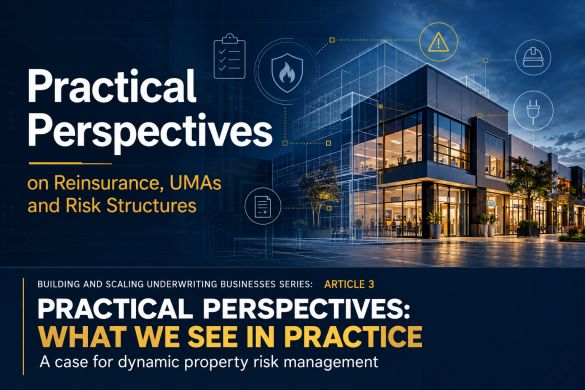
It is understood that when the nature of a physical risk, like a commercial building, changes in some way, that the insured notifies the insurer of the alterations and the underwriting is adapted accordingly. But what happens when those changes are not communicated to the insurer; does the original underwriting still apply to what is essentially an altered risk within the portfolio?
This is the question reinsurers have been considering following a National Financial Ombud Scheme (NFO) case that recently came to light in which a commercial property owner's appeal against a rejected insurance claim was dismissed.
The insured believed the claim had been unfairly rejected, saying that the changes that had been made to the building - which caused a fire that damaged four leased stores in the building - had been made by a tenant without the property owner's knowledge. The NFO ruled that the insurer had not acted unfairly, as it was the responsibility of the landowner, as the insured, to check that no tenant changes had been made to the property that would invalidate the existing underwriting and policy coverage.
No knowledge of tenant activities
The case was drawn from the NFO's 2025 annual report. It centred on the idea that the property owner claimed to have no prior knowledge of the misuse of an extension cord that caused the fire, nor 'non-compliant practices' being undertaken on the insured property.
The landlord stated that before the claim event, it had attempted to contact the tenant leasing the store where the fire broke out, but these had been unsuccessful. As a result, compliance inspections had not been conducted. It maintained it had taken necessary actions to gain access to the property, including an eviction process.
On these grounds the property owner said it had no way of knowing before the event that there was non-compliant use of the extension cord that started the fire, or non-compliant practices present on the property.
The loss was caused, it maintained, as a result of misconduct on the part of tenant. However, aside from the misused extension cord, the investigation also found that the electrical distribution board and wiring did not comply with SANS 10142, and the walls between the stores were not built according to SANS 10400. This necessitates construction with fire-retardant materials reaching roof height to form fire walls between the stores.
While the fire was caused by the overloaded extension cord between two stores, it was exacerbated by poor building practices, which resulted in the fire spreading to two additional shops.
A contained loss, or not?
Ultimately the NFO ruled that the insurer's claim rejection would be upheld, as the onus was on the insured to maintain the property in accordance with building regulations, conduct regular property checks, and ensure its use met all insurance policy requirements.
Undertaking these actions would have prevented the loss from occurring in the first place. The insured also had an obligation to inform the insurer of any changes in the way in which the building was being used, especially as it pertained to increased risk, to enable the underwriting to be adjusted accordingly.
This case makes for an excellent study of changing risk, and just how astute reinsurers must be regarding the risk information captured at underwriting stage, and whether or not it still accurately reflects the physical, insured risk down the line.
As reinsurers, we spend considerable time analysing sums insured, occupancies, geographic concentrations and PMLs. But factors such as changes in tenancy, renovations, electrical alterations, outstanding risk recommendations and inadequate fire compartmentation can materially influence whether an incident remains a contained loss or develops into something significantly larger.
This raises a number of important questions for insurers:
- How effectively are material changes in risk identified after inception?
- Which parts of the commercial property portfolio warrant more frequent risk review or survey?
- Is the underwriting data sufficiently detailed to distinguish well-managed properties from those where risk quality may have deteriorated?
- Are outstanding survey recommendations and changes in occupancy being captured and acted upon?
- What could this mean for loss severity, PML assumptions, treaty performance and reinsurer appetite?
This individual claim may have been about one property, but it does present an opportunity for insurers and reinsurers to consider risks that have not yet had claims lodged, and how the risk may have changed since it was originally underwritten. A key takeout here is that commercial property risk is not stagnant after underwriting. The nature of the risk changes over time, creating a gap between the original risk that was underwritten and the risk that ultimately produces the loss. As this case demonstrated, insured property owners are not always proactive in managing risk, believing that loss caused by a tenant absolves them of responsibility.
This points to a growing need for dynamic risk management on the part of insurers in maintaining portfolio quality. It is critical that insurers understand the risk they are carrying throughout the policy lifecycle, which requires identifying material changes and redoing risk surveys where exposure may have deteriorated.
For reinsurers, changes in individual risk quality can influence portfolio loss distributions, PML assumptions and treaty performance. A portfolio may appear stable even though the underlying quality of the risks within it is changing. Ultimately, the strength of a commercial property portfolio is determined not by the thoroughness of the underwriting at the onset, but how this is adapted to maintain pace with the risk as it evolves, so that changes in risk can be acted on before they become losses.